
Students climbed ladders, tested smoke alarms, and listened for the reassuring chirp of each newly installed device, helping ensure a neighbor would have the protection she needed in an emergency.
For the homeowner, the project meant sleeping a little easier at night. The smoke alarms throughout her home had stopped working, but replacing them was not something she could safely do on her own. Through Wabash Valley Neighbors Helping Neighbors (WVNHN) and its partnership with the American Red Cross, Indiana State University students installed free smoke alarms throughout the house.
When community members need a helping hand, WVNHN’s website connects volunteers with opportunities to make a difference. This spring, that mission was strengthened through a partnership between United Way of the Wabash Valley and Indiana State’s Bachelor of Social Work program, creating meaningful experiences for both residents and future social workers.
Under the leadership of Professor Lakisha M. Bradley, seniors in Indiana State’s Macro Social Work Practice course completed 12 community-based projects in partnership with United Way and WVNHN. Over a nine-week period, student teams worked alongside community members and organizations to address real needs throughout the Wabash Valley.
The course is designed to move students beyond the classroom and into the community, where they can apply social work skills in meaningful ways. Students learn to listen to community needs, assess available resources, organize projects, build relationships, navigate challenges, and better understand how policy and systems impact the lives of individuals and families.
“The purpose of these projects is to help students understand how positive change happens at the community level,” Bradley said. “Through hands-on experiences, they learn that effective social work requires collaboration, advocacy, and a willingness to listen to the people they serve.”
For student volunteer Adyson Littlejohn, the experience highlighted the impact of the program.
“Working directly with this program was an amazing experience,” Littlejohn said. “They do well with communication and help in any way needed. This program is making great strides to make everyone feel included, supported, and valued. I’m excited to see where this program goes. Keep up the great work.”
The partnership demonstrates how small acts of service can create lasting change, not just for those receiving assistance, but for the next generation of social workers.
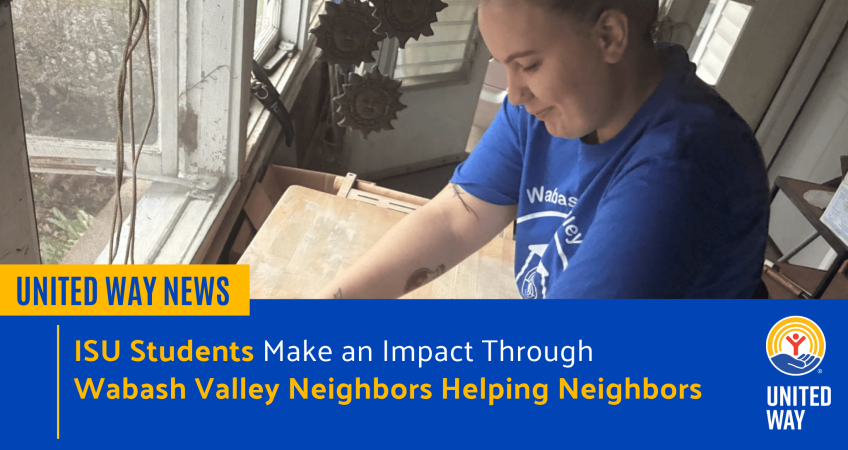
Another group of students restored a well-loved table that had seen better days. That homeowner had hoped to refinish the piece herself, but age made the work too difficult. So, students rolled up their sleeves, carefully sanding away years of wear before applying fresh stain that brought the wood back to life.
What began as a furniture restoration project quickly became something more. As they worked, conversations flowed across the table’s surface — stories about family, memories attached to the piece, and reflections on life in the Wabash Valley. By the time they were done, the table was renewed, but so too was the homeowner’s sense of connection.
“Wabash Valley Neighbors Helping Neighbors is built on the belief that communities are strongest when neighbors support one another,” said Schelia Romanelly, Senior Program Coordinator of WVNHN. “This partnership with Indiana State University gives students the opportunity to see that impact firsthand while helping local residents remain safe, independent, and connected. Together, we’re building stronger communities and inspiring future leaders to serve with compassion.”
The projects serve as reminders that sometimes the most meaningful work isn’t just repairing what’s broken. It’s showing up, listening, and reminding someone they’re not alone.